Chime
A lightly edited excerpt from a review of three films from the 2025 Japanese Film Festival, originally published in Australian Book Review (3 December 2025).
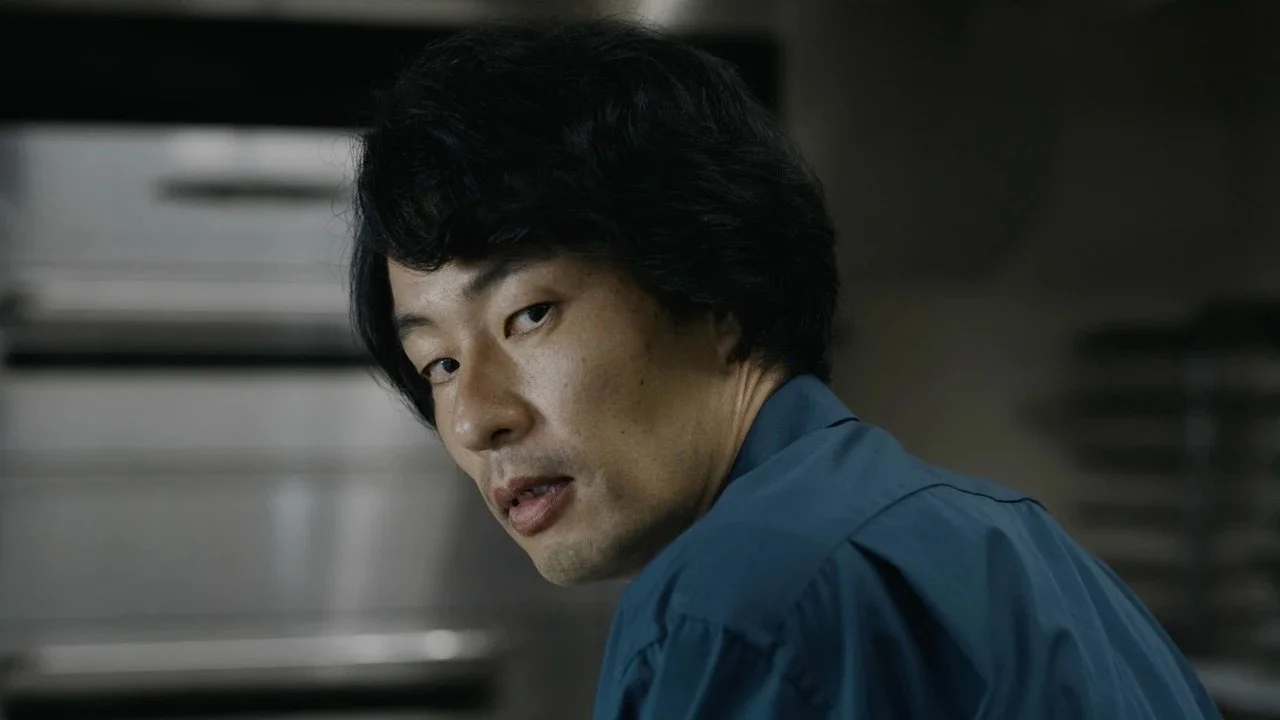
Chime (Kiyoshi Kurosawa, 2024)
★★★★½
At a taut forty-five minutes, Chime is the leanest of the three films Kiyoshi Kurosawa released in 2024 (the others being Cloud and Serpent’s Path, the latter a French remake of his 1998 feature). It is also the most potent: an abstract, deeply unnerving horror film that ranks among the director’s greatest.
The plot serves mainly as a pretext for atmosphere, which Kurosawa prioritises above all else. Matsuoka (Mutsuo Yoshioka), an unassuming instructor at a Tokyo culinary school, notices a student, Tashiro (Seiichi Kohinata), behaving oddly during class. When approached, the young man claims to hear a chime – ‘like a human scream’ – through which something is trying to send him a message. Matsuoka calmly deflects his ramblings but, at their next lesson, Tashiro collects his knife and takes his own life, his terrified classmates watching on.
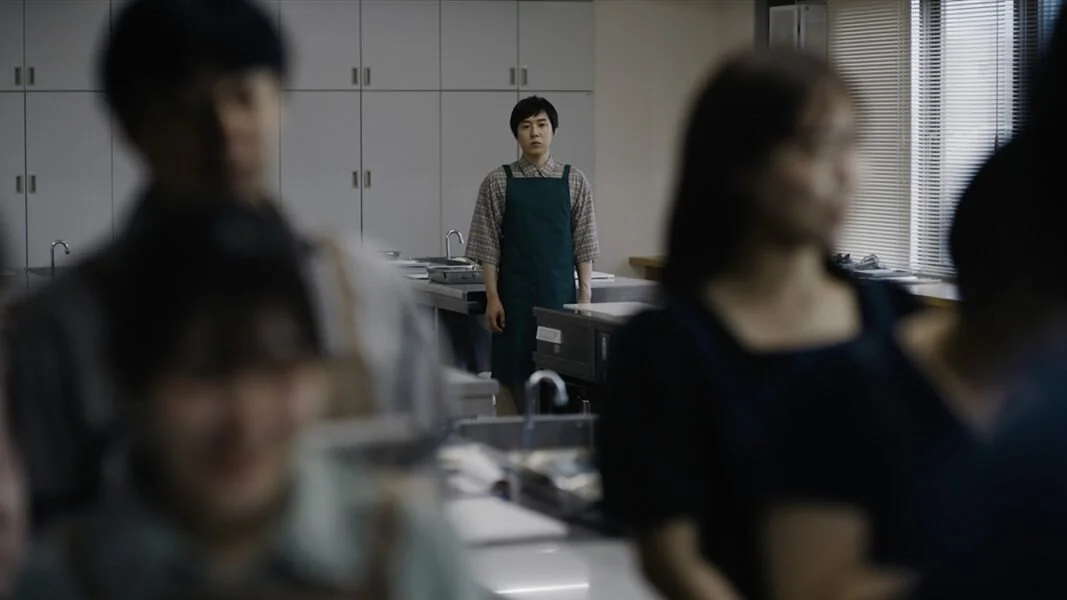
Kurosawa’s horror films are often marked by a malaise that spreads like a virus, governed by a logic that always remains out of reach. Chime follows a broadly similar trajectory: whatever had afflicted Tashiro seems to rub off on Matsuoka, though cracks appear long before the teacher takes his own violent turn. After Tashiro’s suicide, Matsuoka stretches and yawns in the kitchen with insouciant indifference. At home, he mentions nothing of the incident to his wife (Tomoka Tabata), who maintains an air of middle-class normality – that is, until she suddenly rushes from the dinner table to ditch the recycling, performing the chore in a kind of robotic trance.
As the narrative grows increasingly opaque, the film hovers delicately between the ordinary and the uncanny, imbuing every shot with ambiguity. Throughout, Kurosawa conjures his customary dread through the simplest means – a flicker of light, a vague noise, a pan to an empty chair (the film’s closest equivalent to a jump scare) – which might risk ridicule in lesser hands.
All manner of ideas are teased into the mix, ranging from mental illness and career anxiety to ghostly malevolence. None of them can account for just how askew Chime’s quotidian world feels. The film’s chilling thesis is that evil – whether it arises from within or descends from elsewhere – remains fundamentally unknowable.