Kokuhō
A lightly edited excerpt from a review of three films from the 2025 Japanese Film Festival, originally published in Australian Book Review (3 December 2025).
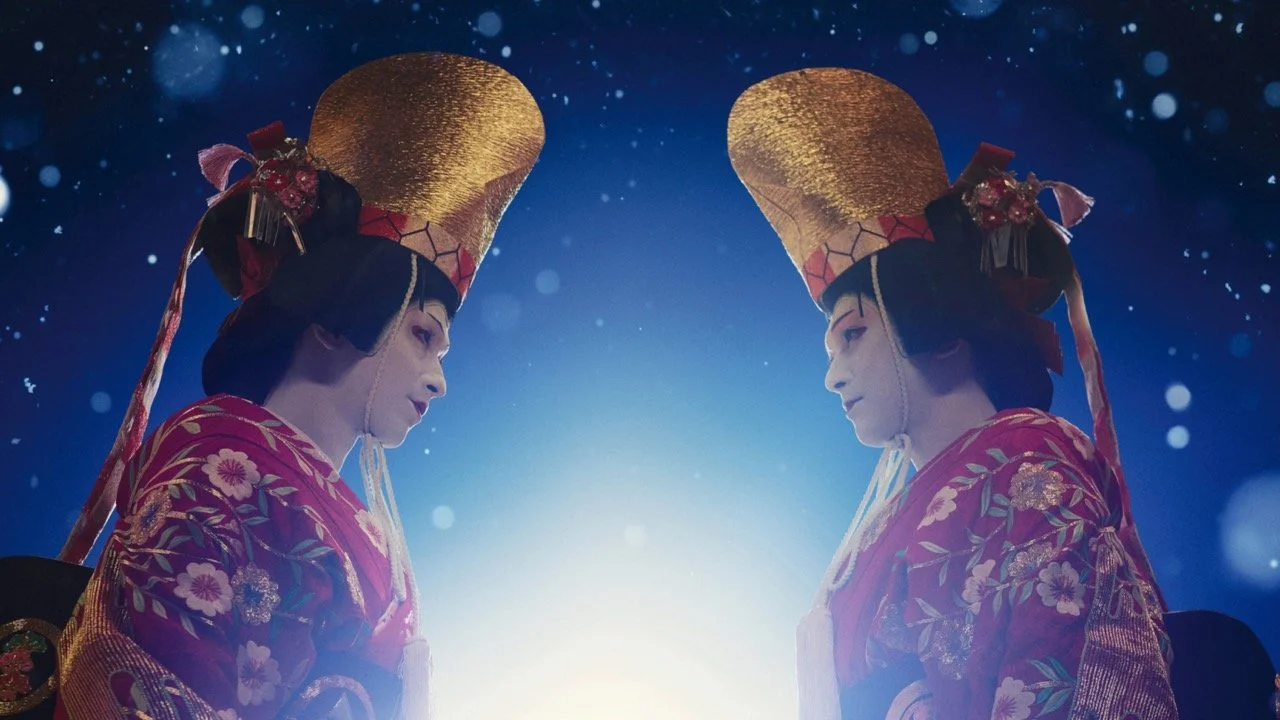
Kokuhō (Lee Sang-il, 2025)
★★½
The phenomenal box-office success of Lee Sang-il’s Kokuhō – a sprawling epic about the friendship and rivalry between two kabuki actors – has been regarded as something of a miracle in Japan. The surprise stems from the same reason films about kabuki are rare: despite being a centuries-old artform of immense cultural significance, it remains neither broadly understood nor widely appreciated.
Lee, a versatile filmmaker whose work spans multiple genres, does not set out to elucidate the kabuki tradition, nor does he weave its stylised artifice into the film’s own aesthetics, as others have done before him. His approach is to enlarge and elongate – to render kabuki as spectacle in purely cinematic terms.
The story begins in Nagasaki in 1964 and unfolds over fifty years. After the murder of his yakuza-boss father, fourteen-year-old Kikuo (Soya Kurokawa) is taken in by Hanjiro (Ken Watanabe), the foremost kabuki actor in Osaka. Under Hanjiro’s strict tutelage, Kikuo apprentices as an onnagata (female impersonator) alongside the master’s son and heir apparent, Shunsuke (Keitatsu Koshiyama) – a boy of similar age and ability, if not quite equal dedication – with whom he quickly forms a bond.
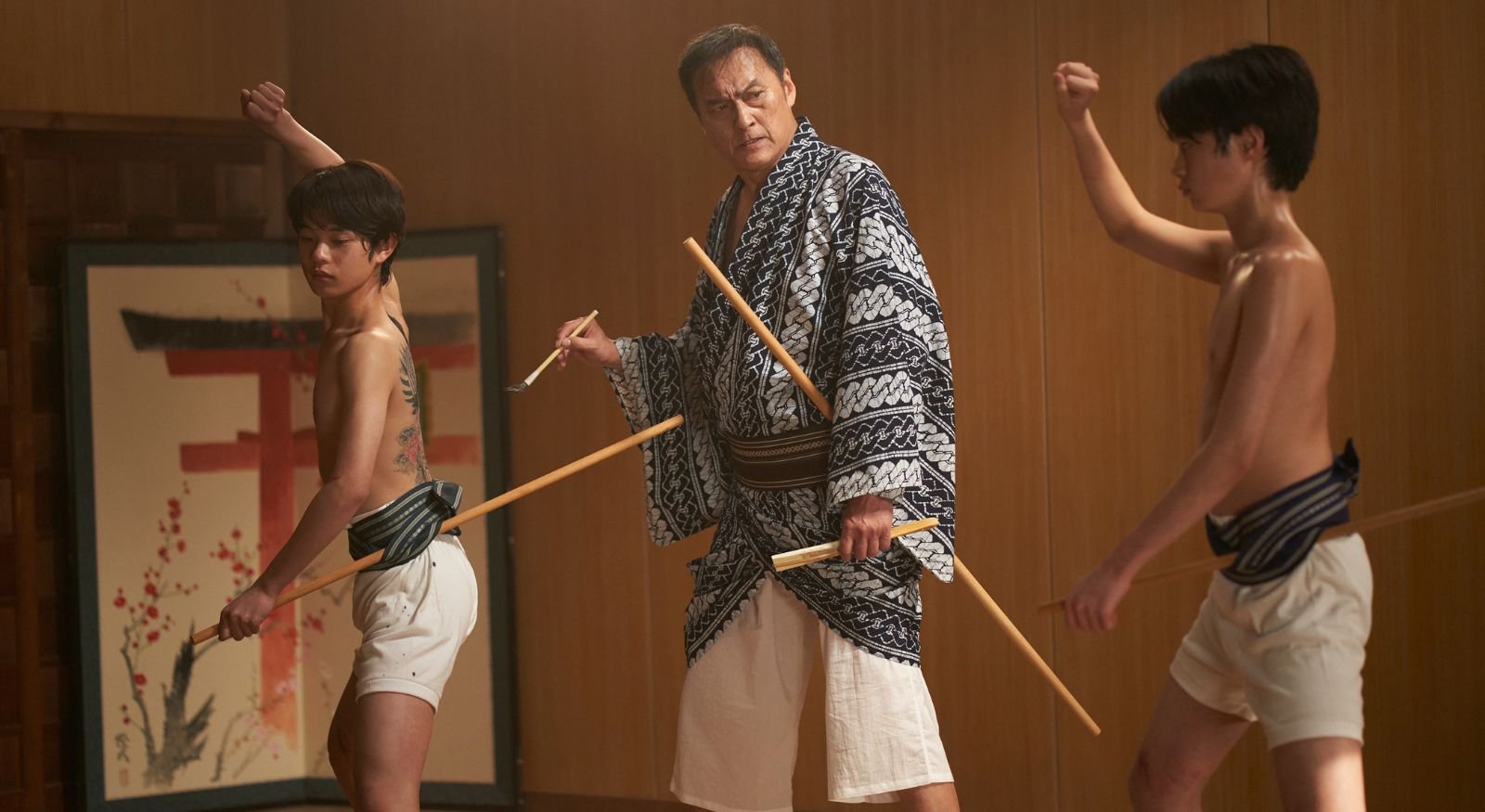
A decade or so later, the now-adult Kikuo and Shunsuke (Ryo Yoshizawa and Ryusei Yokohama, respectively) rise to prominence as a performing duo. But the symmetry of their ascent is soon disrupted by brotherly rivalry and the hereditary demands of kabuki – the complications of which Lee and screenwriter Satoko Okudera (adapting Shūichi Yoshida’s eponymous 2018 novel) trace across the film’s three-hour duration.
Films about a cultural pursuit whose workings are not widely known (Benny Safdie’s mixed-martial-arts drama The Smashing Machine [2025] is a recent example) tend to break the central activity into digestible pieces, leaning on the surrounding drama to convey the characters’ devotion to their craft. Kokuhō, however, largely bucks this trend. Offering guidance only through title cards summarising the plot of each play, Lee affords generous screen time – roughly a quarter of the film – to the kabuki performances themselves, their length far exceeding any narrative meaning that could be gleaned from them.
These sequences are initially filmed at a modest remove, becoming more dynamic as the characters refine their craft. Eventually, the camera is given free rein to spin, glide, and cut across and beyond the stage, capturing the intricacies of each performance with ubiquitous clarity. The results are immersive and compelling, these scenes standing apart from the more conventional drama that occurs around them (and which, slowly but surely, makes its way onto the stage).
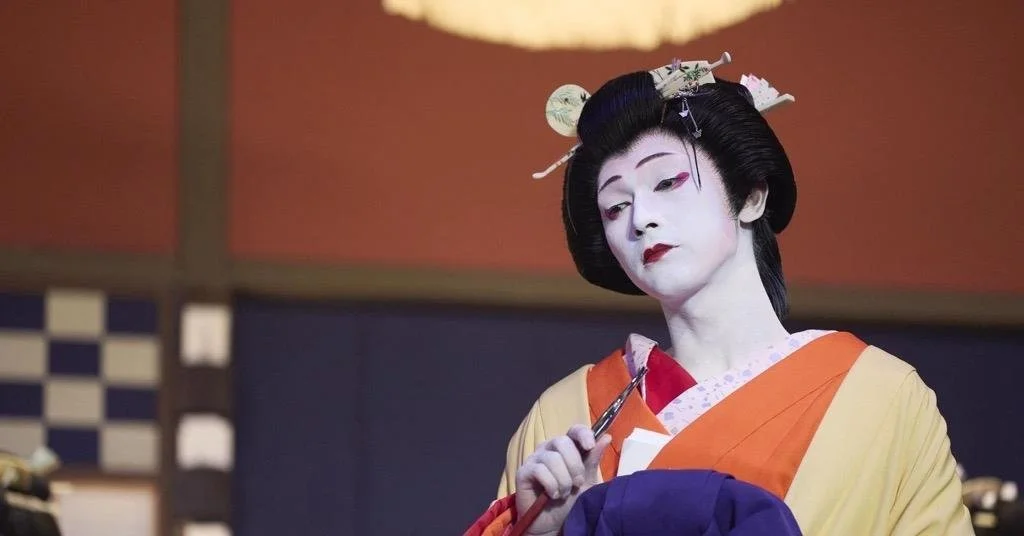
In its emphasis on sweep and spectacle, however, Kokuhō leaves much on the table. The film barely pauses to consider the intriguing gender roles at the heart of the onnagata tradition, or gender full stop, while its narrative ellipses produce some jarring shifts in character. One such turn reveals that Kikuo has fathered a daughter, to whom he seems attached, until he unceremoniously casts both mother and child out of his life a few scenes later. (Here and throughout, the female characters meekly accept their fates to make way for Kikuo’s genius.)
It is tempting to chalk up such behaviour to enigmatic detail, a symptom of an artistic obsession that will remain forever inscrutable. But, as the film progresses, it becomes clear that Lee is convinced that a great artist (or ‘national treasure’, per the title’s translation) can be a good person or an ambitious one, but never both; that whatever suffering they inflict along the way is not only inevitable but worth it in spades. For a film that deploys all the pizzazz of modern filmmaking to make an old art form new, it is a decidedly antiquated stance.